Endings — The River Accord
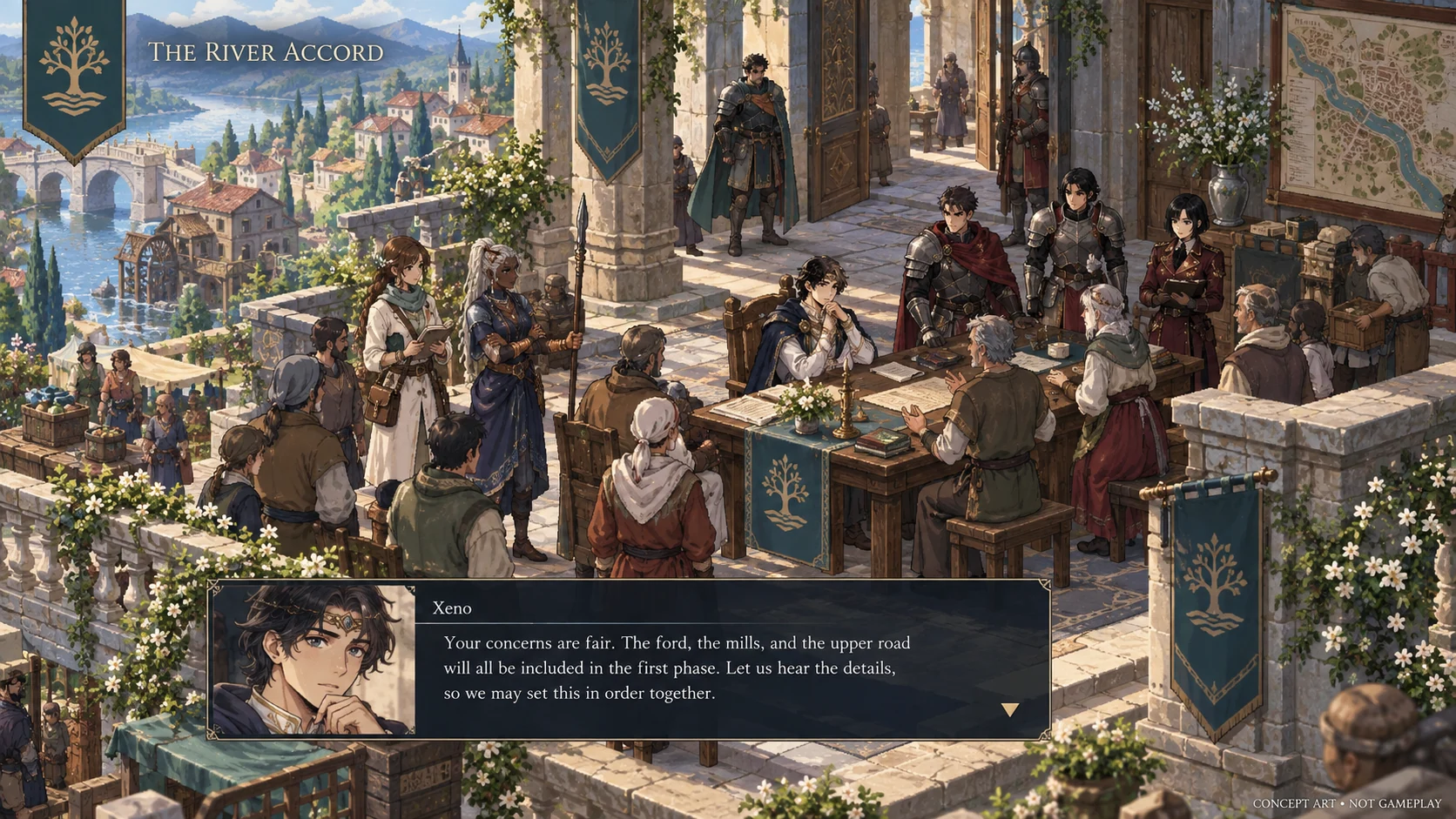
Working design. New events, appearances, mechanics, and political details remain proposals. See canon ledger.
This route requires a coalition able to accept limits, a credible record of wrongdoing, and enough surviving institutions to enforce an agreement. Edric is removed through arrest, abdication, or a concluded confrontation. Xeno can become a constitutional heir or ruler under a settlement that gives provincial councils real authority, subject to the creator's later continuity decisions. Ciro remains responsible for rebuilding an army with civilian oversight and procedures that let soldiers report unlawful orders.
Pyrrhus serves as a temporary protector with a defined term, or declines permanent office after completing the transition. The accord includes revenue rules, local representation, prisoner review, and restrictions on requisitions. It does not abolish every hierarchy overnight. Some nobles retain wealth, some villages remain angry, and the new institutions can fail. The achievement is that disagreement no longer has to depend entirely on which man commands the largest army.
The epilogue emphasizes work continuing in his absence. A steward rejects an unnecessary request from Pyrrhus because the council has already voted. He is briefly annoyed, then recognizes the success. At the ferry, his brothers discuss plans that do not require him to choose their futures. Mara hears them argue about something ordinary and smiles without explaining why.
This is the most hopeful ending, but its hope must be earned through visible compromises rather than described as perfect peace. It closes the early war. It does not promise immunity from the later tragedies established elsewhere in Ayelette's history.
Source document: 06-expanded-storyline.md