The first ordinary morning
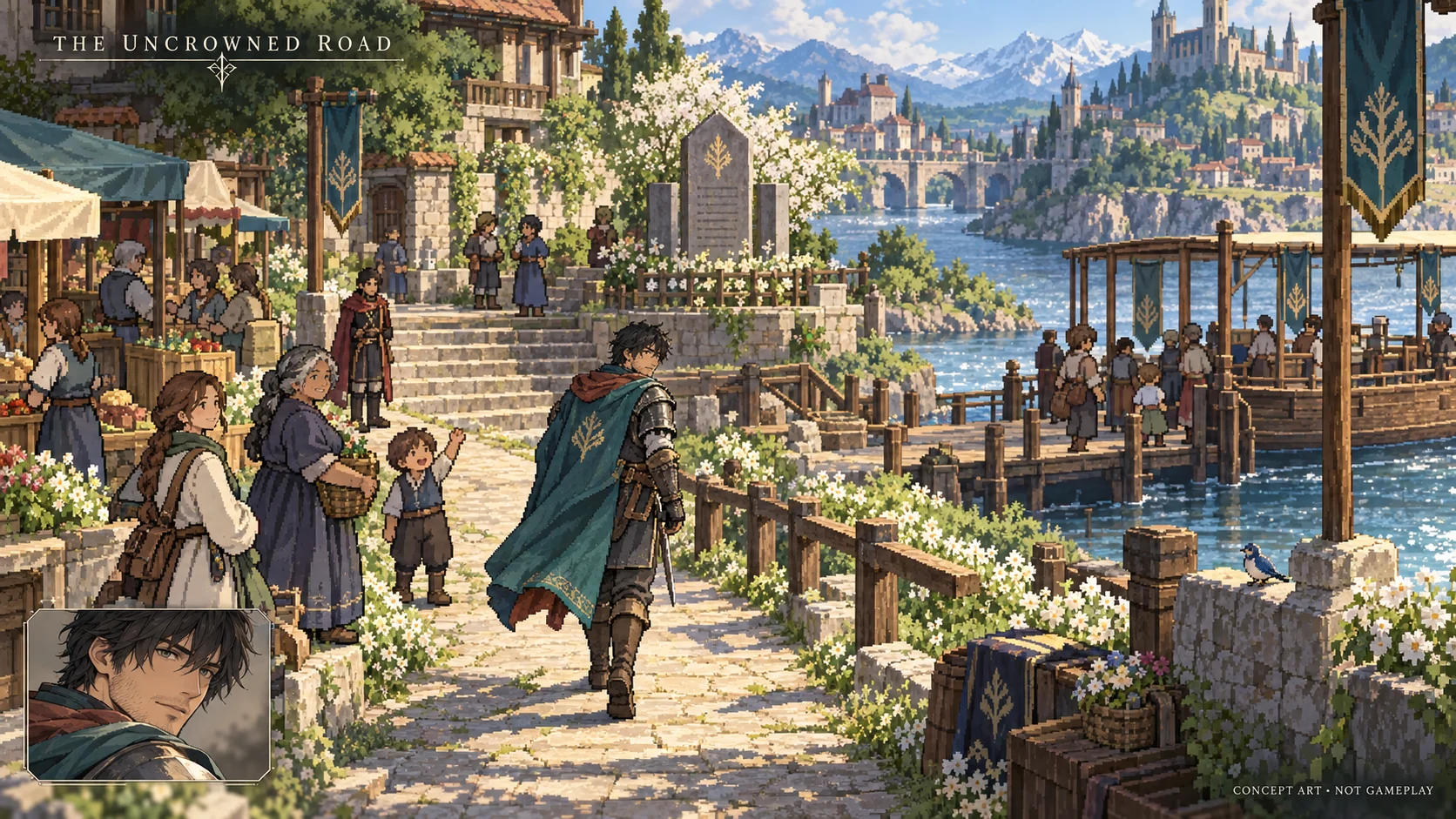
Working design. New events, appearances, mechanics, and political details remain proposals. See canon ledger.
The campaign does not end at the throne. It continues through a short playable aftermath in which the player revisits the consequences of victory. Prisoners need hearings. Soldiers want to go home and be paid. Councils disagree about emergency powers. The granaries do not refill because the correct banner hangs above them. Pyrrhus receives more petitions on the first peaceful morning than he did during some weeks of war.
At Cinderford, the repaired ferry becomes a gathering place. Which buildings stand, which companions attend, and which families are present reflect the campaign. The player can speak to the miller, former deserters, surviving witnesses, and the people appointed to govern while Pyrrhus traveled. Some thank him. Some remain angry. The game lets those responses coexist without forcing a final reconciliation scene for everyone.
Mara asks what he wants to do next. Early in the story, that question would have sounded irresponsible because other people needed him. Now the quality of his leadership is partly measured by whether they can continue without his constant presence. A province that collapses whenever its hero leaves has not truly been saved. This provides the thematic resolution connecting the tactical company to the territory systems.
The last ordinary task can be helping push a wagon onto the ferry. It recalls the opening axle, but now Pyrrhus has people around him who can take over. Depending on the ending and romance, he may leave, remain temporarily in public office, or depart on a limited commission with a clear return date. The game closes this war while leaving his later life open.
Source document: 06-expanded-storyline.md