The general's tribunal
Working design. New events, appearances, mechanics, and political details remain proposals. See canon ledger.
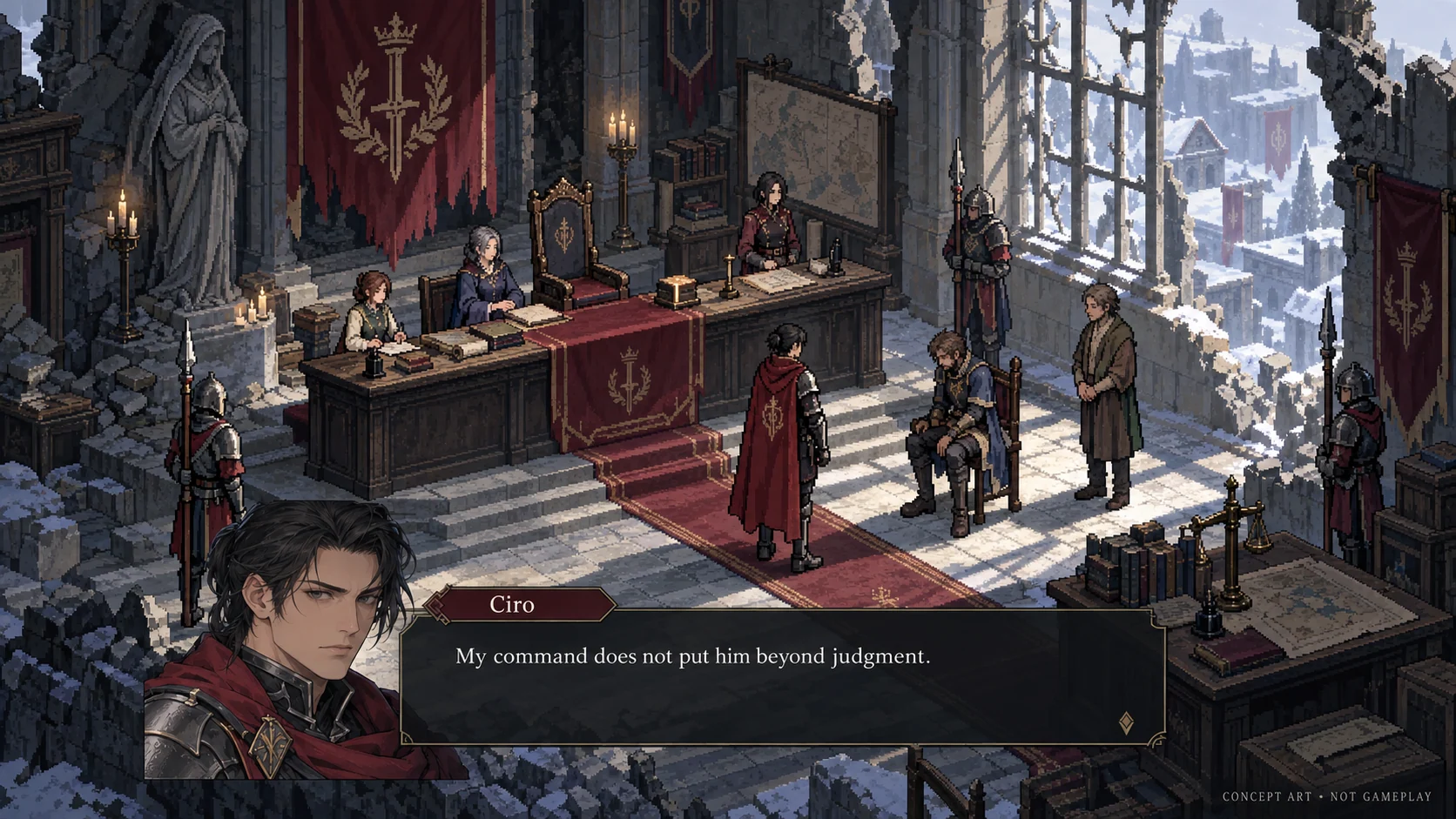
Ciro's army fractures under unpaid wages and contradictory orders. One regiment burns a settlement after an officer is killed during a requisition. The officer responsible, Major Renn, previously saved Ciro's life. Ciro authorized the operation but not the collective punishment. He initially tries to handle the matter within the army, fearing that a public trial will destroy discipline and encourage desertion.
Survivors reach Pyrrhus's coalition. Some demand that Ciro himself be surrendered. The brothers' confrontation is among the campaign's most important scenes. Ciro says he cannot command men who believe any difficult order will end with their general abandoning them. Pyrrhus answers that the villagers were also entitled to believe someone would stand by them. Both are speaking from loyalties the player has seen develop.
The proposed tribunal includes military officers, local representatives, and an independent recorder. It is imperfect and politically vulnerable. Ciro must testify about what he knew, when he knew it, and why he failed to inspect previous complaints. A romance partner may support the process while disagreeing with Pyrrhus's preferred sentence. Personal closeness cannot erase public accountability.
The player can support a genuine hearing, accept an army-managed compromise, or suppress the case to preserve immediate strength. A genuine hearing may cost Ciro officers and troops, but it gives him a chance to build authority that does not depend on protecting every subordinate. Suppression can keep a powerful army intact while creating a lasting grievance. The point is not that justice always produces a hidden reward. It is that the player must decide what kinds of harm a useful ally is allowed to commit.
Source document: 06-expanded-storyline.md