The country before the first battle
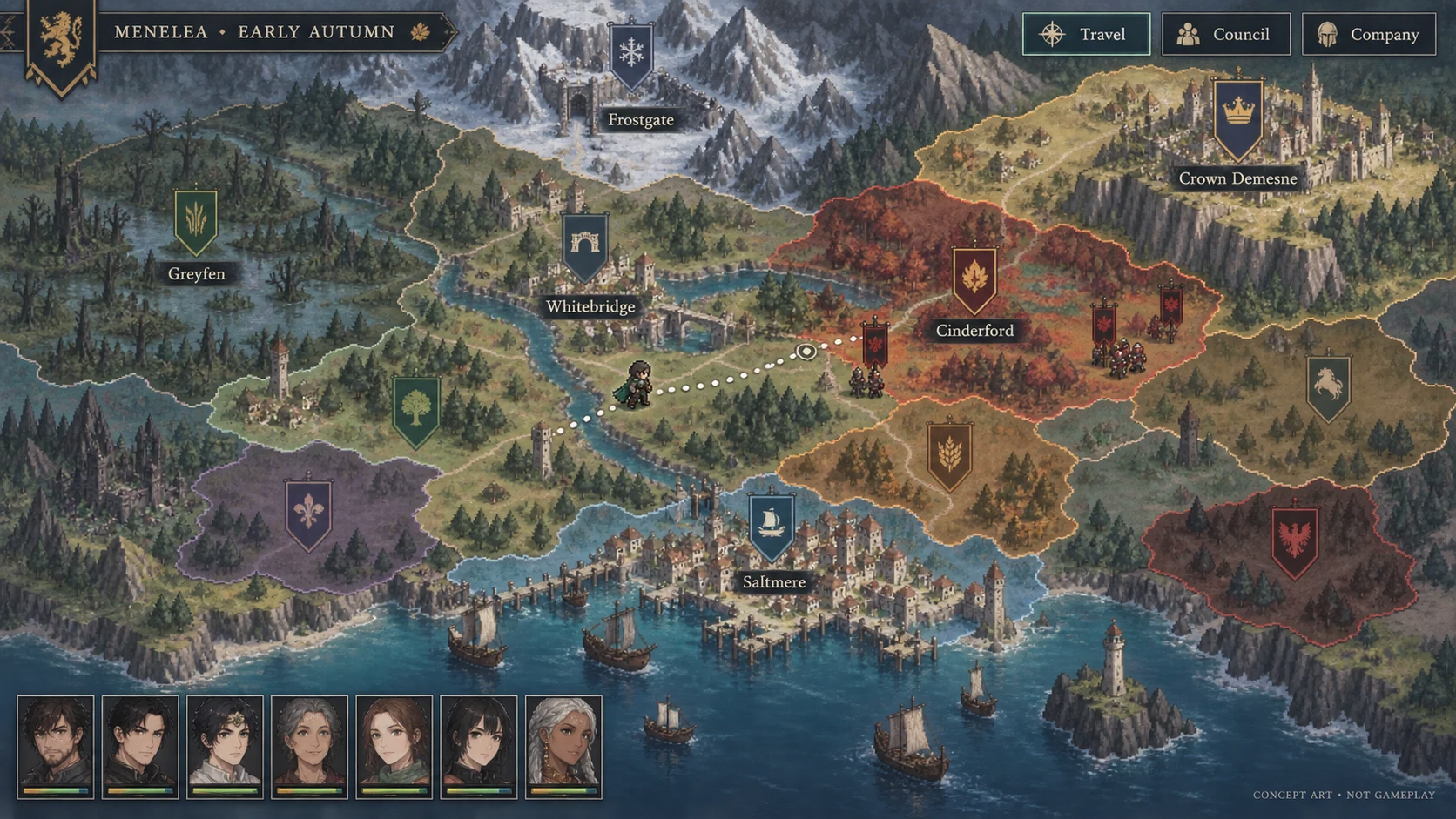
Working design. New events, appearances, mechanics, and political details remain proposals. See canon ledger.
Menelea has recently won an expensive border war. At court, victory means banners, restored fortresses, and songs about King Edric Menethil. In the provinces, it means discharged soldiers who have not been paid, farms missing the people who worked them, and bridges still broken by armies that have already marched home. The harvest is mediocre rather than catastrophic. There is enough food to survive the winter if it is distributed fairly. That distinction matters: the coming famine is a political failure, not a natural disaster that excuses everyone.
The crown financed its victory through the Houses of Account in the port of Saltmere. In exchange for loans, the king pledged future grain taxes and allowed creditors to seize certain provincial revenues when payments fell behind. He also promised the army its arrears, promised returning soldiers land, and promised the frontier lords compensation for defending the border. Those promises all depend on the same harvest. Chancellor Oren Saye has hidden the conflict through deferred accounts, expecting another successful levy to postpone the reckoning.
The Winter Levy makes postponement impossible. Royal collectors demand grain already promised to local garrisons and creditors. Provincial lords claim ancient exemptions. Some protect their people; some use resistance to preserve private armies and their own wealth. Farmers cannot distinguish their benefactors from their exploiters by the color of a banner. A lord who opens his granaries may also forbid his tenants from leaving. A royal officer who protects a convoy may be delivering its food to a lender instead of a town.
The king responds to resistance as if it were a continuation of the border war. He believes disobedience spreads when it is rewarded. Several lords interpret his threats as proof that he intends to strip their charters. Foreign merchants begin buying grain at inflated prices. Veterans take tollhouses and call themselves companies. The country becomes violent before anyone formally declares civil war.
Succession intensifies the crisis. In this proposed version, Xeno was named heir through a settlement supported by the queen's family and the major creditors. Ciro's military career was presented as an honor that placed him outside that settlement. The king cultivated both arrangements: one son would embody continuity at court, the other would enforce it abroad. Ciro once accepted this willingly. He has since learned that serving a family and being trusted by it are different things.
Source document: 06-expanded-storyline.md