How the relationships intersect
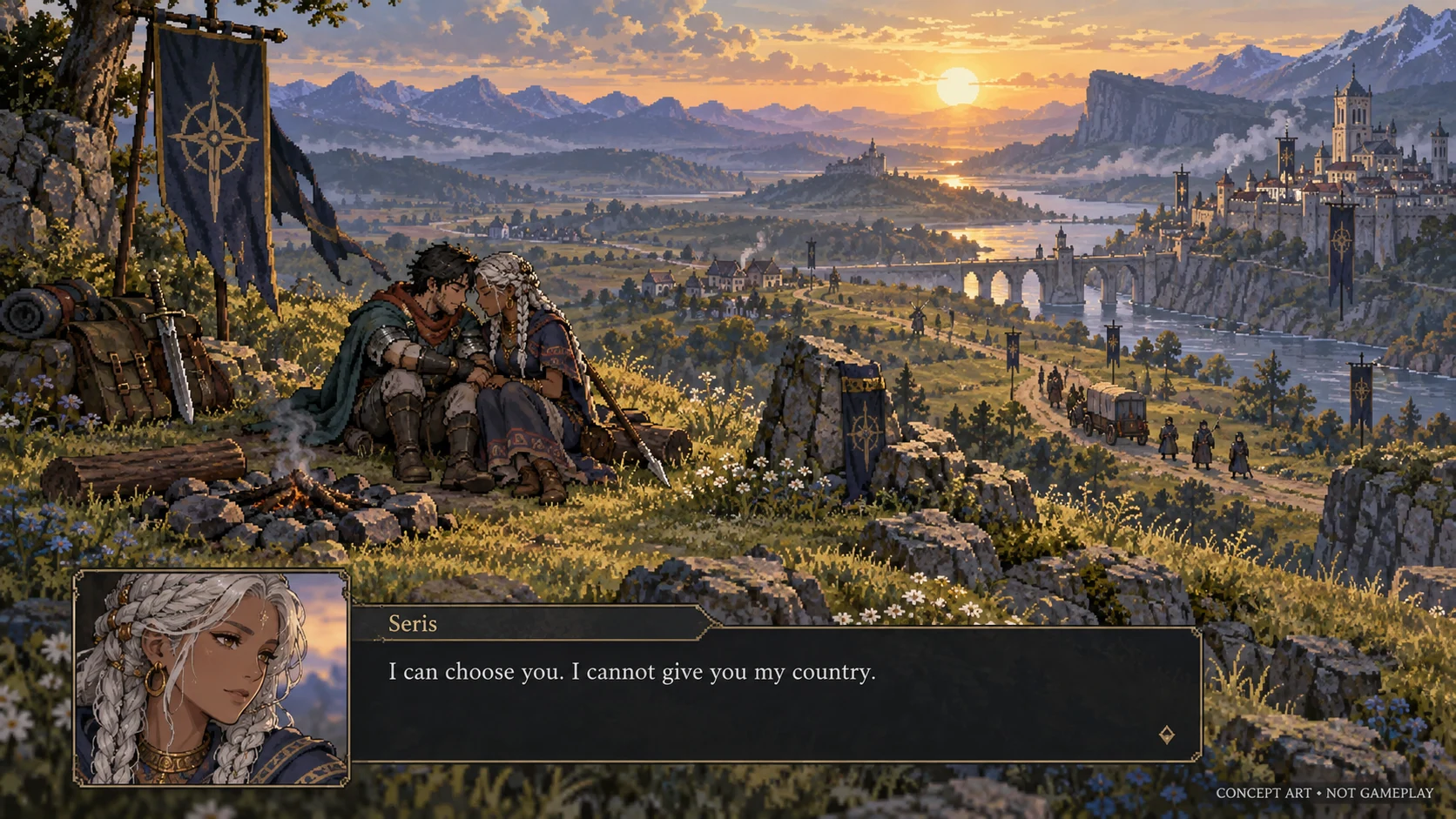
Working design. New events, appearances, mechanics, and political details remain proposals. See canon ledger.
The three women are not prizes representing simple ideological buttons. Mira can support a necessary military operation; Yselle can argue for mercy; Seris can demand a difficult defensive sacrifice. Their views emerge from experience, responsibilities, and personality rather than a fixed approval checklist. They can become friends, disagree, collaborate, or criticize each other without every exchange revolving around Pyrrhus.
Early attraction can remain open, but a committed relationship requires an explicit conversation. The player is warned through natural dialogue when ambiguity begins hurting someone. There is no hidden reward for keeping three committed romances active through deception. A breakup can lead to friendship or professional cooperation if handled honestly. Choosing no romance leaves all three with complete personal and political arcs.
Each route includes ordinary pleasure: Mira's terrible singing while washing supplies, Yselle's competitive fondness for strategy puzzles, Seris's ability to find the best food in an unfamiliar market. These details should not appear only as rewards after trauma. They establish why the characters enjoy one another's company before the player is asked to fear losing it.
Companion loyalty and romantic intimacy remain separate. A partner may disagree with a policy without breaking up. A political betrayal may end trust even if the player has selected every flirtation option. The game should explain consequential disagreements through scenes and letters, avoiding unexplained approval losses. Mature romance here means two adults negotiating a life under pressure, with the possibility that affection will not solve an ethical conflict.
Source document: 06-expanded-storyline.md